Evaluating Business, Web and Interface Line Icons C for Modern Digital Projects
Selecting the right visual language is one of the most critical decisions in digital product design. When reviewing asset libraries, designers and project managers often encounter the Business, Web and Interface Line Icons C collection as a potential candidate for their interface needs. This specific set distinguishes itself through a hybrid approach that combines traditional linear iconography with isometric perspectives, targeting complex business concepts that flat symbols often fail to communicate effectively. Understanding where this collection fits within the broader ecosystem of UI assets requires looking beyond aesthetic preference and evaluating functional utility, scalability, and long-term maintenance.
Defining the Visual Scope and Technical Characteristics
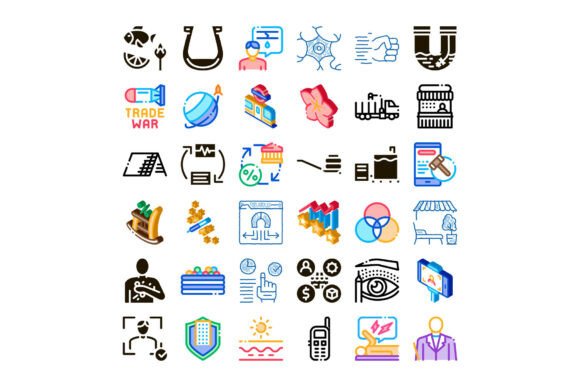
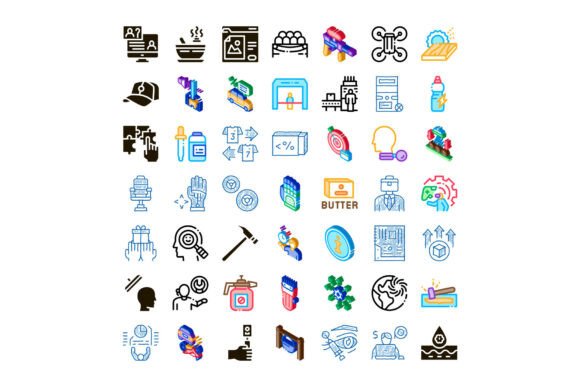
The Business, Web and Interface Line Icons C collection is primarily defined by its stroke-based architecture. Unlike filled or solid icon sets which rely on mass and silhouette, line icons utilize negative space and consistent stroke weights to define form. This particular variation integrates isometric projection, meaning many icons are rendered on a 30-degree axis rather than a flat frontal plane. This distinction is significant for users attempting to visualize abstract business processes, data flow, or technological infrastructure.
From a technical standpoint, these assets are typically vector-based, allowing for infinite scaling without pixelation. However, the complexity of isometric line work introduces specific constraints. While a standard flat line icon might consist of three to five paths, an isometric counterpart in this collection may contain significantly more anchor points to maintain geometric accuracy. Users evaluating this set must verify that the stroke width remains optically consistent when scaled down to small sizes, such as 16x16 pixels for tab bars or dense data tables. The collection generally excels at medium-to-large display sizes where the depth and detail of the isometric angle remain legible.
Comparing Linear Isometric Styles Against Flat Alternatives
When comparing Business, Web and Interface Line Icons C against standard flat icon libraries, the primary tradeoff is cognitive load versus semantic richness. Flat icons are universally recognized for rapid scanning; a simple envelope means "mail," and a gear means "settings." They are optimized for speed and minimalism. In contrast, the isometric line style offers higher information density. An isometric server rack icon can convey hardware, connectivity, and physical scale simultaneously, whereas a flat rectangle with lines only suggests generic storage.
This makes the Business, Web and Interface Line Icons C collection particularly suitable for B2B SaaS platforms, fintech dashboards, and enterprise resource planning interfaces where the user base possesses domain expertise. For consumer-facing mobile applications where instant recognition is paramount, the added visual complexity of isometric lines may introduce unnecessary friction. Designers must weigh whether their audience benefits from the illustrative quality of isometric lines or requires the immediate clarity of flat symbolism. There is no superior option universally; there is only the appropriate choice for the specific context of use.
Stroke Consistency and Optical Balance
A common point of failure in mixed-style icon sets is inconsistent optical weight. When evaluating this collection, it is essential to test how the isometric icons sit alongside standard orthogonal (flat) icons. Because isometric shapes occupy more vertical space and have diagonal lines that can appear thinner due to anti-aliasing, they sometimes require manual adjustment to match the perceived weight of their flat counterparts. High-quality iterations of Business, Web and Interface Line Icons C will have pre-adjusted stroke widths to compensate for this optical illusion. If the set requires extensive manual tweaking to achieve visual harmony across a navigation bar, the time investment may outweigh the cost savings of purchasing a pre-made library.
Strategic Fit: When to Choose This Collection
The decision to adopt Business, Web and Interface Line Icons C should be driven by content strategy rather than trend adherence. This collection performs best in scenarios requiring differentiation through professionalism and technical precision. Marketing landing pages for technology products benefit significantly from this style, as the isometric perspective implies structure, engineering, and modernity. Similarly, empty states in complex software applications can utilize these icons to provide friendly yet professional guidance without appearing childish.
Conversely, this collection may be ill-suited for high-density utility tools or accessibility-first government services. The intricate nature of isometric line work can reduce contrast ratios and legibility for users with visual impairments. If WCAG AAA compliance is a strict requirement, simpler filled icons often provide better accessibility outcomes. Furthermore, if the project roadmap anticipates frequent additions of custom icons, the team must possess the vector illustration skills necessary to replicate the specific isometric grid and stroke style of this collection. Inconsistency between stock assets and custom-drawn additions creates a disjointed user experience that undermines trust.
Evaluating Format Flexibility and Integration
Beyond aesthetics, the practical value of Business, Web and Interface Line Icons C lies in its file format versatility and integration capabilities. Professional evaluation should include testing the SVG code cleanliness. Poorly optimized vectors may contain hidden layers, excessive metadata, or non-standard grouping that complicates CSS manipulation. A robust version of this collection will offer clean, minified SVGs that allow developers to control color and stroke width via currentColor properties or CSS variables.
- SVG Sprites: Essential for web performance, allowing multiple icons to load in a single request. Verify that the isometric paths do not bloat the sprite sheet size excessively.
- Figma/Sketch Components: Check if the source files are organized as components with auto-layout or variant properties. This drastically reduces design system maintenance time.
- PNG Fallbacks: While less common in modern development, having pre-rendered raster versions at multiple densities (@1x, @2x, @3x) ensures compatibility with legacy email clients or print materials.
- Icon Font Support: Generally discouraged for isometric line art due to hinting issues and lack of multi-color support, but worth noting if working within restrictive legacy frameworks.
If the intended workflow involves heavy customization, access to the original editable source files is non-negotiable. Some marketplaces sell flattened or outlined versions of Business, Web and Interface Line Icons C that cannot be easily modified. Always confirm that strokes remain live and editable before purchase to ensure future adaptability.
Licensing and Long-Term Viability Considerations
Commercial licensing terms vary significantly between icon providers and directly impact the total cost of ownership. When selecting Business, Web and Interface Line Icons C, review the license regarding client work, redistribution, and trademark usage. Standard licenses typically cover unlimited projects for a single designer or agency but may prohibit embedding the icons in a template for resale or using them as part of a logo. Enterprise licenses are often required for large organizations with distributed teams.
Long-term viability also depends on the update frequency of the collection. Technology and business terminology evolve rapidly; concepts like "cloud computing" or "remote work" have changed visually over the last decade. A static icon set purchased today may look dated in three years. Evaluating whether the creator actively maintains and expands the Business, Web and Interface Line Icons C library provides insurance against future obsolescence. Sets backed by active design systems or regular updates offer better long-term value than isolated, one-off releases, even if the initial price point is higher.
Making the Final Selection Decision
Ultimately, the suitability of Business, Web and Interface Line Icons C depends on aligning visual complexity with user needs and technical constraints. It represents a sophisticated middle ground between minimalist utility and illustrative richness. For teams building specialized business tools, marketing sites for tech products, or interfaces requiring conceptual depth, it offers distinct advantages over generic flat libraries. However, for high-accessibility requirements, simple consumer apps, or teams lacking vector editing resources, alternative styles may prove more efficient.
Before committing, conduct a real-world prototype test. Import a subset of the icons into the actual development environment and view them on target devices at intended sizes. Assess legibility, loading performance, and stylistic cohesion with existing typography and color palettes. This empirical validation step prevents costly rework and ensures that the chosen iconography genuinely supports the product’s usability goals rather than merely decorating the interface. By approaching the selection process with analytical rigor, stakeholders can confidently determine whether this specific collection serves as the right foundation for their digital ecosystem.