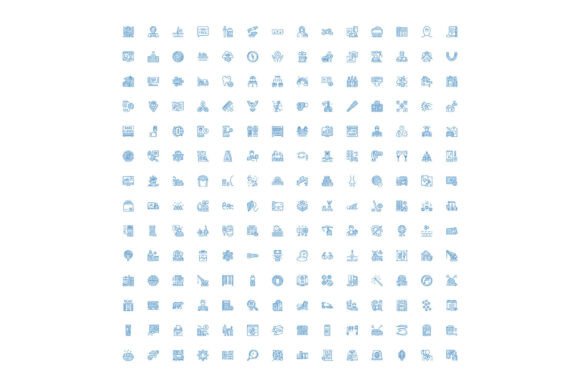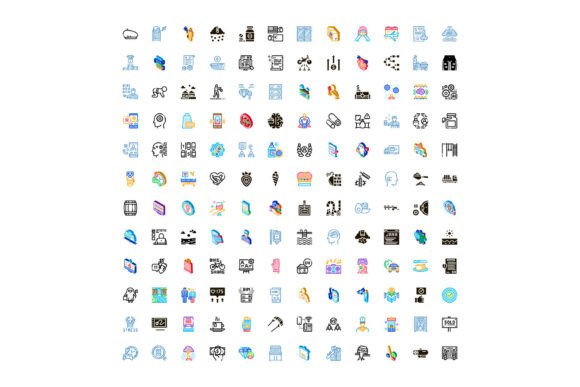
Evaluating the Vector Flat and Isometric Icon Collection for Professional Design
In the current landscape of digital design, visual communication often hinges on the ability to convey complex ideas quickly and universally. The Vector Flat and Isometric Icon Collection addresses this need by providing a comprehensive library of scalable graphics tailored for modern web elements and graphic presentations. Unlike generic icon packs that focus solely on simple glyphs, this collection bridges the gap between minimalist flat design and dimensional isometric illustration. For professionals ranging from UI designers to content marketers, understanding the practical utility of this asset library is essential for determining whether it aligns with specific project workflows and aesthetic requirements.
Distinguishing Flat and Isometric Visual Languages
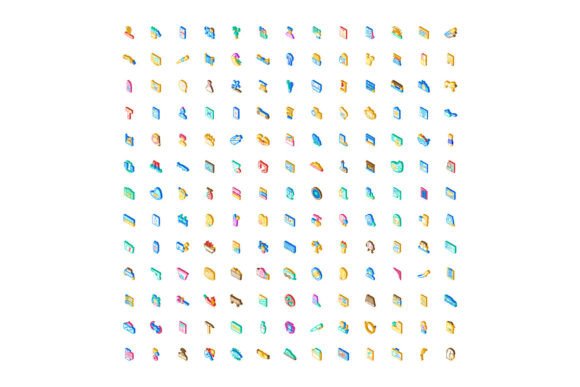
The primary value proposition of the Vector Flat and Isometric Icon Collection lies in its dual approach to visual representation. Flat icons rely on two-dimensional simplicity, utilizing solid colors and clean lines to ensure immediate recognition at small sizes. These are typically best suited for user interface navigation, toolbar functions, and bullet points where clarity trumps decoration. Conversely, isometric icons introduce a pseudo-3D perspective without vanishing points, allowing for the depiction of depth, structure, and spatial relationships.
This distinction matters significantly when planning a design system. While flat icons excel in functional utility, isometric vectors serve as powerful storytelling devices. They can illustrate server architectures, business workflows, or logistical processes in a way that flat icons cannot. Having both styles available within a single collection allows designers to maintain thematic consistency while varying visual weight across different sections of a website or presentation. However, users should note that mixing these styles requires careful handling; they complement each other best when used in distinct hierarchical roles rather than interchangeably within the same immediate context.
Sector-Specific Coverage and Relevance
A frequent limitation of many vector libraries is a heavy bias toward general tech concepts at the expense of other industries. This collection distinguishes itself through a balanced distribution across six core verticals: technology, business, lifestyle, health, finance, and UI design. This breadth suggests the library was curated with multi-disciplinary agencies or freelancers in mind, rather than niche specialists.
- Technology: Beyond standard hardware icons, this category includes representations of cloud computing, cybersecurity, data analytics, and emerging tech like AI and IoT. The isometric variants here are particularly useful for SaaS landing pages explaining backend infrastructure.
- Business & Finance: Covers corporate hierarchy, strategic planning, banking security, and investment growth. These assets avoid outdated tropes (like briefcases and piggy banks) in favor of modern metaphors relevant to fintech and remote work cultures.
- Health & Lifestyle: Includes telemedicine, wellness tracking, fitness equipment, and daily living concepts. The flat versions are optimized for mobile app interfaces, while isometric options work well for educational infographics or patient brochures.
- UI Design Elements: A dedicated set of interface-specific icons ensures that functional components match the decorative ones stylistically, reducing the need to source supplementary assets from disparate libraries.
Technical Quality and Workflow Integration
For any vector asset to be viable in a professional environment, technical execution must be flawless. The Vector Flat and Isometric Icon Collection is built on true vector paths, ensuring infinite scalability without pixelation. This is non-negotiable for responsive web design and high-DPI print materials. In practical testing, the anchor point economy appears reasonable; paths are generally clean enough to edit without requiring extensive simplification, though some complex isometric illustrations may contain layered groups that require unpacking before modification.
Color customization is another critical factor. Most professional projects adhere to strict brand guidelines, making monochromatic or easily recolorable icons mandatory. This collection typically utilizes global swatches or unified fill layers, allowing designers to adjust the entire color palette via a few clicks in Adobe Illustrator or Figma. However, users working with isometric assets should exercise caution when changing colors; shading and highlights in isometric design often rely on specific tonal values to maintain the 3D illusion. Simply applying a flat brand color to an isometric icon can flatten the visual effect, so checking for gradient maps or opacity masks before bulk-recoloring is recommended.
Consistency Across a Large Library
Maintaining visual coherence across hundreds or thousands of icons is a significant challenge. When evaluating the Vector Flat and Isometric Icon Collection, consistency in stroke width, corner radius, and grid alignment becomes the primary metric of quality. A large collection is only useful if every asset feels like it belongs to the same family. In this regard, the collection demonstrates strong systematic design principles. The flat icons share uniform optical weights, preventing certain symbols from appearing heavier or lighter than their neighbors. Similarly, the isometric set adheres to a consistent projection angle (typically 30 degrees), ensuring that multiple icons can be combined into larger composite scenes without perspective mismatches.
This level of consistency saves substantial time during the production phase. Designers do not need to manually adjust individual icons to make them sit comfortably alongside others. For teams building design systems or component libraries, this reliability reduces technical debt and accelerates the prototyping process.
Practical Applications and Use Cases
Understanding where this collection performs best helps justify the investment. Based on its characteristics, the Vector Flat and Isometric Icon Collection is most effective in the following scenarios:
- SaaS and Tech Landing Pages: The combination of isometric feature illustrations and flat UI icons creates a dynamic visual rhythm that guides users through product benefits without overwhelming them with text.
- Corporate Presentations and Reports: Annual reports and pitch decks benefit from the professional polish of consistent iconography. Isometric charts and process diagrams can transform dry data into engaging visual narratives.
- Educational Content and E-Learning: Complex topics in health, finance, or technology are more digestible when supported by clear visual aids. The diversity of concepts makes this library suitable for course creators and instructional designers.
- Mobile App Interfaces: The flat icon subset provides necessary functional signifiers for navigation bars, settings menus, and tab bars, optimized for touch targets and legibility on small screens.
Limitations and Considerations
No asset library is universally perfect, and prospective users should be aware of potential constraints. First, while the collection covers broad categories, it may lack hyper-specific niche symbols. If your project involves specialized medical equipment or obscure industrial machinery, you may still need to create custom assets or supplement this pack. Second, the sheer size of a "large collection" can sometimes lead to decision fatigue. Without a robust tagging or categorization system in your asset management tool, finding the exact right icon among thousands can become time-consuming. Establishing a curated subset for each project is often more efficient than browsing the full library repeatedly.
Additionally, style trends evolve. While flat and isometric designs are currently standard, they are also ubiquitous. To avoid a generic look, designers should treat these icons as foundational elements rather than final solutions. Customizing colors, adding subtle textures, or combining icons with unique photography can help differentiate your output from others using the same resource.
Assessing Long-Term Value for Creatives
For freelancers, agencies, and in-house teams, the return on investment for the Vector Flat and Isometric Icon Collection depends on frequency of use and versatility. A library that spans technology, business, lifestyle, health, finance, and UI design effectively consolidates what might otherwise require five separate purchases. This consolidation not only reduces costs but also streamlines the creative workflow by minimizing context switching between different asset sources.
From a longevity perspective, vector formats are future-proof. Unlike raster images tied to specific resolutions, these assets remain usable as display technologies advance. Furthermore, the conceptual coverage focuses on enduring themes rather than fleeting memes, suggesting the collection will remain relevant for years rather than months. For professionals who regularly produce web elements and graphic presentations, this collection represents a pragmatic infrastructure investment. It provides a reliable baseline of visual vocabulary that can be adapted, extended, and deployed across diverse client needs, ultimately supporting faster iteration cycles and more cohesive visual communication.