The Visual Language of Motion: Understanding Waving Flags and Banners in Modern Design
In the vast landscape of visual communication, few symbols carry as much immediate recognition and emotional resonance as the flag. From national identities to sporting events, corporate branding to digital notifications, flags and banners serve as universal signifiers. However, in the realm of graphic design and web development, a static rectangle often fails to capture the true essence of what a flag represents. This is where collections of waving flags, banners, and pennants illustrations become indispensable assets. By incorporating motion, texture, and diverse styling, these visual elements transform simple signals into dynamic storytelling tools that enhance user experience and brand identity.
Beyond Static Symbols: The Psychology of Movement
To understand why a collection of waving flags and pennants is so valuable, we must first look beyond the shape itself. A flag at rest is merely a piece of colored fabric; a flag in motion is a message being delivered. The wave implies wind, environment, and life. In digital interfaces and print media, replicating this movement serves a psychological purpose. It draws the eye through natural curiosity and suggests activity or urgency without relying on aggressive animation.
When designers utilize illustrations from comprehensive collections, they are tapping into established semiotics. A gently rippling banner might suggest celebration or welcome, while a sharply snapping pennant could indicate speed, competition, or alertness. Understanding these nuances allows creators to match the visual style of the flag to the specific intent of the project. For beginners in design, this distinction is crucial; selecting the wrong type of wave can create cognitive dissonance, where the visual cue contradicts the textual message. Conversely, experienced designers use these variations to add layers of subtext to their work, enriching the overall narrative.
Categorizing Shapes and Styles for Specific Needs
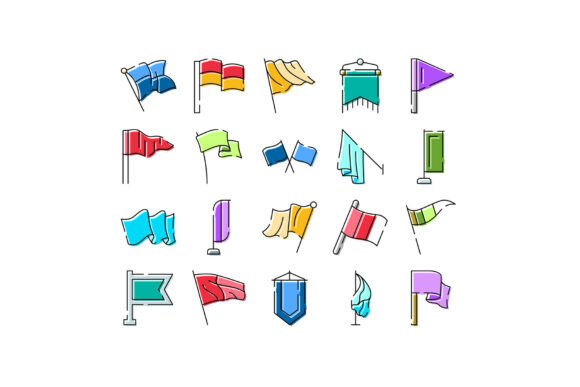
A robust collection of waving flags and banners is not monolithic; it is defined by its variety. Different shapes serve different functional roles in both physical and digital spaces. Understanding these categories helps users select the appropriate asset for their specific application.
- Rectangular National and State Flags: These are the most recognizable forms, typically featuring a 2:3 or 3:5 aspect ratio. In illustration collections, these are often rendered with realistic shading to convey dignity and formality. They are essential for localization features on websites, international shipping indicators, and educational materials.
- Pennants and Triangular Flags: Characterized by their tapered ends, pennants are historically associated with maritime signaling and sports. In modern web design, they are frequently repurposed as "sale" tags, notification badges, or decorative headers. Their sharp geometry creates a sense of directionality that guides the user’s gaze across a layout.
- Swallowtail and Guidon Banners: Featuring a V-cut or split end, these shapes bridge the gap between formal heraldry and festive decoration. They are particularly effective in e-commerce environments for highlighting special offers or limited-time events, as their unique silhouette stands out against standard rectangular UI elements.
- Ribbon and Scroll Banners: While technically distinct from flags, these are often included in waving collections due to their similar fluid dynamics. They provide ample space for typography and are ideal for section titles, call-to-action buttons, and certificate designs.
Practical Applications in Digital and Print Media
The versatility of waving flag illustrations extends far beyond patriotic themes. In contemporary design workflows, these assets solve specific functional problems while adding aesthetic value. For web designers, a waving flag icon can serve as an intuitive language selector, reducing friction for non-native speakers navigating a site. Unlike a flat icon, the illustrated wave adds a tactile quality that makes the interface feel more polished and human-centric.
In the context of branding, custom-colored waving banners allow companies to adopt the symbolism of authority and visibility without co-opting national imagery. A tech startup might use a sleek, minimalist waving pennant in their brand colors to signify innovation and forward momentum. Similarly, educational platforms utilize these illustrations to gamify learning experiences; a waving flag can represent a completed module or an achievement unlocked, leveraging the universal association of flags with victory and progress.
Furthermore, these collections are vital for event marketing. Whether designing signage for a music festival, a corporate retreat, or a community fair, organizers rely on varied banner styles to create visual hierarchy. Large waving banners attract attention from a distance, while smaller pennants delineate pathways or mark specific booths. The ability to access a cohesive collection ensures that all event materials share a consistent visual language, reinforcing brand recall and professional presentation.
Navigating Color Theory and Cultural Context
One of the most critical aspects of working with flag and banner illustrations is color management. While many collections offer pre-colored assets, the most useful resources provide customizable templates or neutral versions. This flexibility is paramount because color carries profound cultural weight. A red waving banner signifies prosperity and luck in some cultures but may signal danger or debt in others.
Designers must approach color selection with intentionality. When using these illustrations for global audiences, it is best practice to avoid mimicking specific national color combinations unless explicitly referencing that nation. Instead, utilize brand palettes or universally understood color codes—such as green for success or yellow for caution. Additionally, understanding the interplay of light and shadow in waving illustrations is key to realism. The folds of a flag create natural gradients; ensuring these shadows align with the lighting direction of the overall composition prevents the element from looking like a sticker pasted onto the design. This attention to detail separates amateur layouts from professional-grade visuals.
Technical Considerations for Modern Workflows
For those integrating these assets into digital projects, technical specifications matter as much as artistic style. Modern collections typically offer vector formats (SVG, EPS, AI) alongside raster options (PNG, JPG). Vector formats are generally superior for web elements and responsive design because they scale infinitely without losing clarity. This is especially important for waving flags, where the intricate details of fabric folds can become pixelated or blurry at larger sizes.
Moreover, accessibility should never be an afterthought when using decorative flag illustrations. If a waving banner contains text or serves a navigational function, it must include appropriate alt text. If it is purely decorative, it should be hidden from screen readers to prevent clutter. Understanding the semantic role of the image ensures that the design remains inclusive. Additionally, designers should be mindful of file size; highly detailed waving illustrations can be complex. Optimizing SVG paths or using modern compression techniques ensures that the addition of these rich visual elements does not negatively impact page load speeds or performance metrics.
Common Misconceptions and Best Practices
A frequent misunderstanding among novices is the assumption that any waving flag asset will work for any context. However, style consistency is non-negotiable. Mixing a photorealistic, grunge-textured flag with a flat, geometric UI kit creates a jarring visual disconnect. Users should always curate assets from the same collection or artist to maintain stylistic harmony.
Another common pitfall is overuse. Because waving flags are visually active, using too many in a single layout can create visual noise and distract from primary content. They should be used strategically as accents, dividers, or focal points rather than background filler. Finally, it is essential to verify licensing rights. Just because an illustration depicts a generic shape does not mean it is free for commercial use. Respecting intellectual property protects businesses from legal issues and supports the artists who create these valuable resources.
Ultimately, a well-curated collection of waving flags, banners, and pennants is more than just a folder of graphics; it is a toolkit for non-verbal communication. By understanding the history, psychology, and technical application of these symbols, designers and creators can harness the power of motion to build more engaging, intuitive, and culturally resonant experiences. Whether signaling a new feature on an app or celebrating a milestone in print, the waving flag remains one of our most enduring and adaptable visual metaphors.